
Yellowjackets Control Truckee, CA
Stop yellowjackets from ruining your deck, yard, and summer, with safe nest removal.
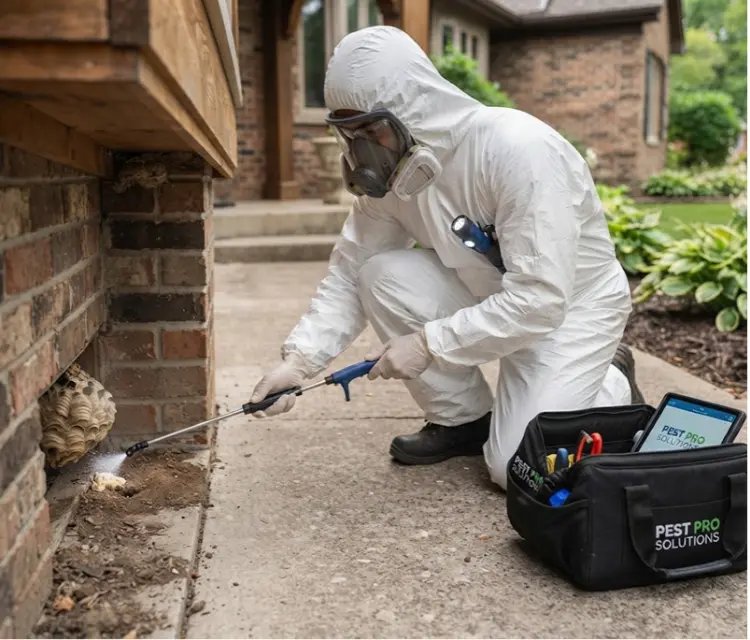
Yellowjackets are the wasps most people dread. They swarm barbecues, crawl into soda cans, and defend their nests with sudden, repeated stings. Many nests sit out of sight, in the ground or inside a wall, until someone walks too close. Pest Control Truckee provides yellowjackets control Truckee homeowners, cabin owners, and rental managers can rely on. We find the nest, treat it safely, and help keep yellowjackets from returning to your property.
Yellowjackets Control Truckee: Why They Thrive in Mountain Properties
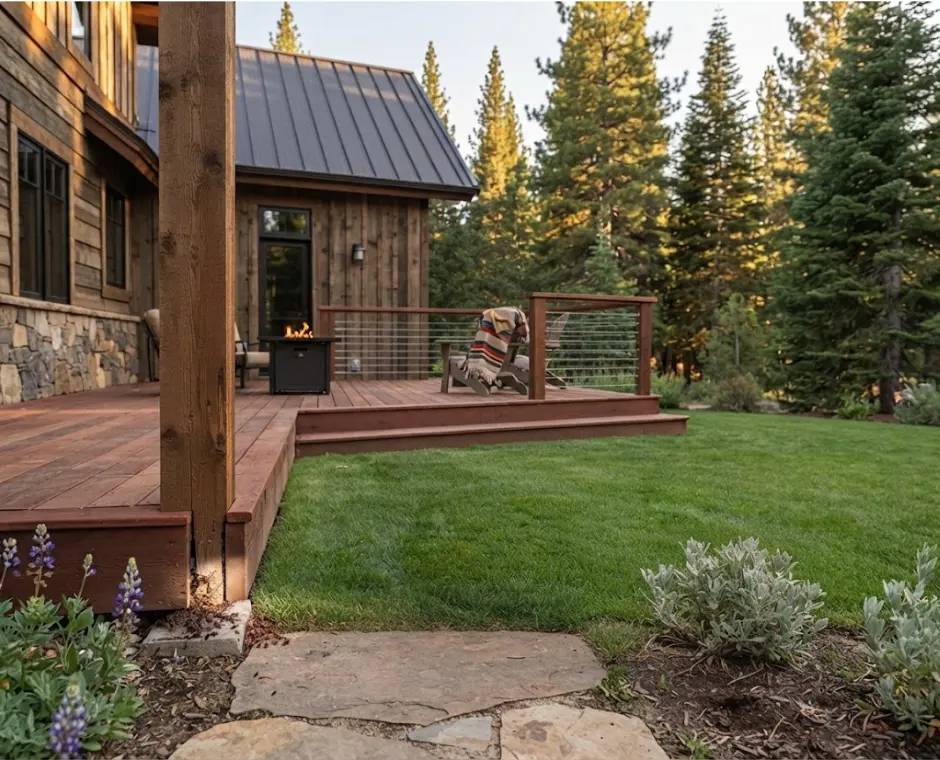
Truckee has the ingredients yellowjackets look for: forest, meadows, old rodent burrows, woodpiles, and plenty of outdoor eating. Lake days, barbecues, camping, and deck dinners all put food and sweet drinks right where yellowjackets forage.
Their colonies grow fast. A nest that starts with one queen in spring can hold hundreds of workers by late summer, which is why the problem seems to appear overnight in August.
Common nesting spots
- Old rodent burrows and holes in the ground
- Wall voids, attics, and soffits
- Under decks, porches, and stairs
- Woodpiles, stumps, and retaining walls
- Sheds, crawl spaces, and garages
How to Identify Yellowjackets
Many people call every stinging insect a bee. Yellowjackets have a few clear traits that set them apart.
Appearance
About half an inch long, with bright yellow and black bands, a narrow waist, and a smooth, shiny body with no fuzz like a bee.
Behavior
Fast, aggressive fliers that hover around food, trash, and sweet drinks, and defend their nest when anyone comes close.
Nests
Usually hidden underground or inside walls. The nest is made of a gray, paper-like material and has a single small entrance.
Yellowjackets Control Truckee Through the Seasons
Timing makes a big difference. Knowing what yellowjackets do each season helps you act at the right moment.
Spring
Queens come out of hibernation and start small nests alone. This is the easiest time to remove a nest, long before it becomes a problem.
Summer
Workers hatch and the nest expands. Yellowjackets hunt insects and other protein, so you may see more wasps around meat, pet food, and trash.
Late summer and fall
Colonies reach full size and workers crave sugar, so they swarm drinks, fruit, and desserts. Aggression peaks, and stings become most common.
When the first hard frost arrives, the colony dies. Only new queens survive the winter, and they look for sheltered spots to wait for spring. Old nests are not reused.
Signs You Have a Yellowjacket Nest
A hidden nest often gives itself away through small clues.
In the yard
- A small hole with wasps flying in and out
- Wasps rising up when you mow or walk by
- A steady flight path to one spot
On the building
- Wasps entering a gap in siding or soffits
- Buzzing from inside a wall
- Gray paper-like material near an opening
Around people
- Unexpected stings near a deck or lawn
- Many wasps around trash and drinks
- Wasps entering a window or door
Yellowjackets vs. Bees and Other Wasps
Telling them apart helps you choose the right fix, and it protects bees that are worth saving.
- Honey bees and bumble bees are rounder and fuzzy, and they feed on flowers. They are important pollinators and rarely sting unless handled.
- Paper wasps are longer and slimmer, with dangling legs, and they build open umbrella-shaped nests under eaves.
- Yellowjackets are compact and shiny, with a short body, and they are drawn to food and drinks.
If we find honey bees, we will tell you and suggest a local beekeeper who can relocate them. Our service focuses on yellowjackets and other stinging wasps.
Why Yellowjackets Are a Real Risk
Yellowjackets can sting many times, and a disturbed nest can send out dozens of wasps at once. Most stings cause pain and swelling, but some people have serious allergic reactions. If someone has trouble breathing, swelling of the face or throat, or dizziness after a sting, call 911 right away.
The danger is higher for children, pets, and older adults. A nest near a play area, entry door, or rental patio is a risk worth fixing quickly.
What Not to Do When You Find a Nest
These common reactions often make things worse:
- Don’t block the entrance. Trapped wasps can chew into your living space.
- Don’t pour liquids or fuel into a ground nest. It is dangerous and rarely works.
- Don’t spray a nest in daylight. It sends angry wasps in every direction.
- Don’t swat at wasps. It can trigger an attack.
- Don’t mow or trim near the nest. Vibrations disturb them.
Mark the area from a safe distance, keep people and pets away, and call a professional.
Our Yellowjackets Control Truckee Process: Locate, Treat, Prevent
We deal with the whole nest, not only the wasps you can see. Every job follows three steps.
Locate the Nest
We watch flight paths, check the yard, walls, attic, and decks, and confirm the species. Some properties have more than one nest, so we search carefully.
Safe Treatment
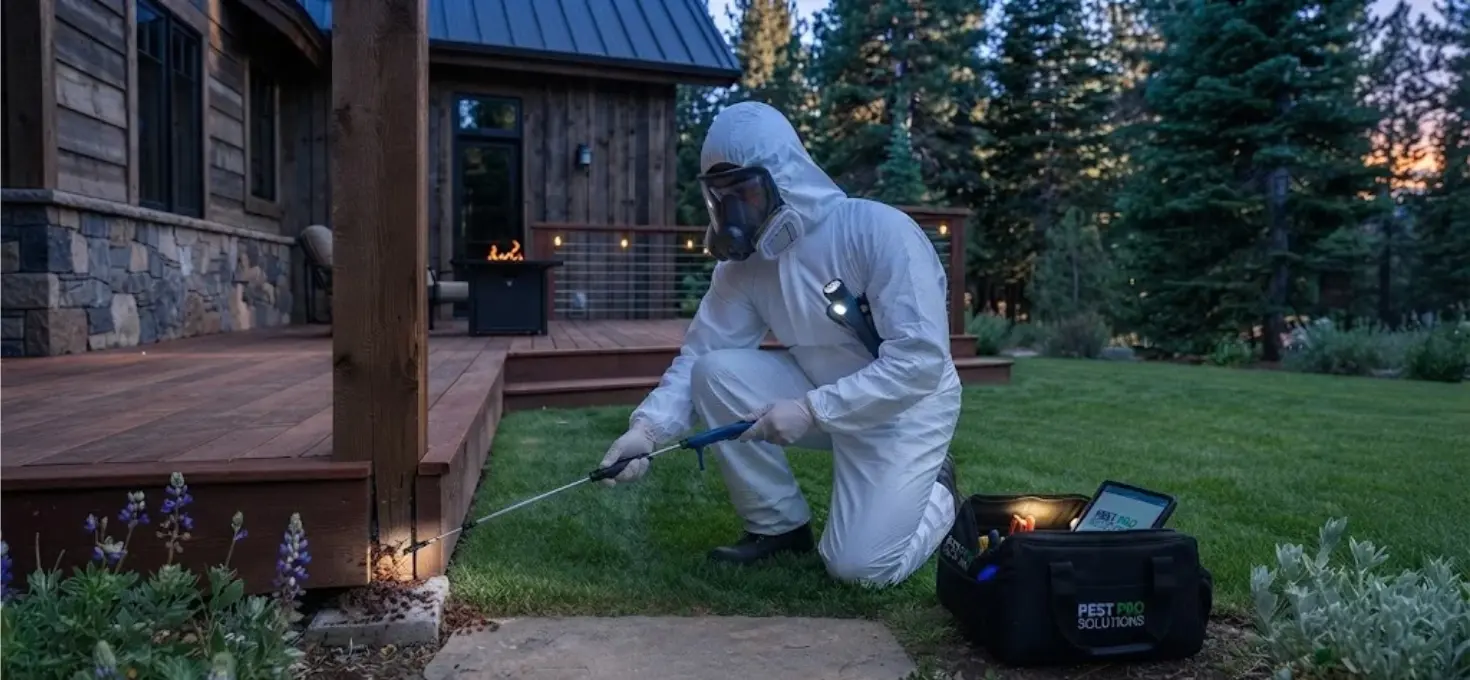
We treat the nest directly, often at dusk when the wasps are inside and less active, wearing full protective gear. We tell you which products we use and how long to keep people and pets away.
Prevent a Return
We fill burrows, seal entry gaps, and point out what attracts yellowjackets, such as open trash and pet food, so new queens look elsewhere next spring.
Do Yellowjacket Traps Work?
Store-bought traps can lower the number of yellowjackets around a picnic area, but they don’t remove the nest. The colony keeps producing new workers, so the problem continues.
Traps work best as a small extra, such as placing one away from your seating area. If you keep seeing yellowjackets in the same place, there is almost certainly a nest nearby, and it needs to be treated.
Simple Tips to Keep Yellowjackets Away
- Keep trash cans tightly closed and rinse bins often
- Cover food and drinks outside, and check cans before you sip
- Pick up pet food, fallen fruit, and crumbs
- Fill holes and old burrows in the yard
- Seal gaps in siding, soffits, and foundation vents
- Walk your property in spring and look for small starter nests
- Keep woodpiles away from the house
Calling early in the season costs less and is far safer than waiting for a large nest in August.
Yellowjacket Control for Homes, Cabins, Rentals, and Businesses
- Homeowners with nests near doors, lawns, or play areas
- Cabin owners opening up for summer
- Vacation rental managers who need safe patios and decks for guests
- Restaurants, campgrounds, and resorts with outdoor dining and trash areas
We serve Truckee, Tahoe Donner, Donner Lake, Martis Valley, Northstar, and the wider North Tahoe region.
Yellowjackets Control Truckee FAQs
How much does yellowjacket control cost in Truckee?
The yellowjacket control cost depends on the number of nests, where they are, and how hard they are to reach. After the inspection, we give you a clear quote before any work begins.
How long until the yellowjackets are gone?
Most activity drops within a day or two after treatment. Some returning wasps may circle the old entrance for a short time. Large or hidden nests may need a follow-up.
Can I remove a yellowjacket nest myself?
We don’t recommend it. Yellowjackets sting repeatedly and defend their nests aggressively, and ground or wall nests are hard to treat correctly. A professional visit is safer.
Will yellowjackets come back next year?
They don’t reuse the same nest, but new queens may choose a nearby spot. Filling burrows, sealing gaps, and removing food sources reduces the chance.
What if the nest is inside my wall?
Don’t seal the hole. We treat the nest through the entrance, and once the activity stops, we help you close the opening so wasps can’t use it again.
Is the treatment safe for pets and kids?
We explain each step and tell you how long to keep people and pets away from the treated area. Please share any concerns during the inspection.
Get a Free Quote for Yellowjackets Control Truckee
Found a nest or tired of wasps on your deck? Call us or send a request, and we’ll remove the nest safely so you can enjoy your property again.